A Tale of Two Businesses - How the Digital Transformation (DX) of Capital Affects SMBs



“It was the best of times, it was the worst of times, it was the age of wisdom, it was the age of foolishness, it was the epoch of belief, it was the epoch of incredulity, it was the season of Light, it was the season of Darkness, it was the spring of hope, it was the winter of despair, we had everything before us, we had nothing before us, we were all going direct to Heaven, we were all going direct the other way.”
This is not a tale of two cities, but of two small businesses, restaurants to be precise.
One is based in Argentina, a country suffering through political instability and a failing economy. The other restaurant is based in New York City with access to affluent clientele and some of the best suppliers and staff in the world. Which one do you think survived?
The surprising answer is that a bar-bistro just a few blocks from the River Plate soccer stadium in Buenos Aires beat the odds to make it, while the New York restaurant closed last year. Here’s what happened.
Gonzalo Bazterrica, the Argentine restaurateur (now a colleague of mine at Sovreign), convinced his business partners to use extra initial investment capital to buy Bitcoin instead of putting it in the bank or buying inventory (like wine).
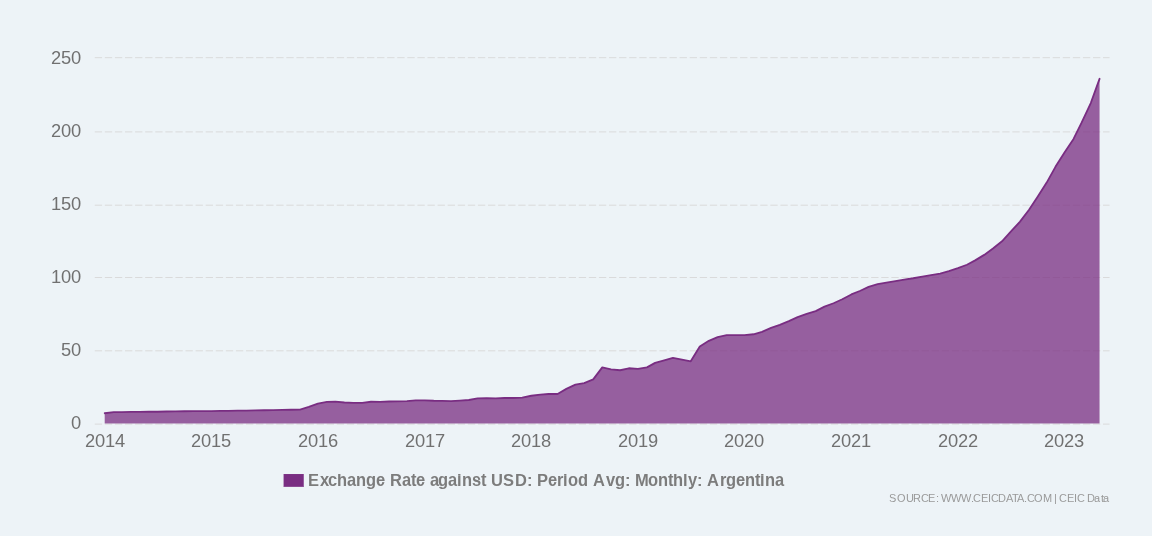
This might seem like a crazy bet to an American entrepreneur, but with the peso suffering a more than 20x depreciation vs the US dollar in 10 years, all Argentines already know that keeping cash reserves is like flushing fistfuls of dollars down the toilet every month. Half the value is gone.
Gonzalo saw Bitcoin, with its fixed supply, as the perfect hedge that prevented the capital from losing value to inflation, and at the time of sharing this story on the Bitcoin Business Podcast, the investment was up 70% (in USD terms).
“Having lived through Argentina's economic collapse, I understand that Bitcoin isn't about getting rich—it's about preserving what you've worked to build. True financial sovereignty means controlling your own money.”
- Gonzalo Bazterrica, restaurateur.
The economic situations of the two countries are vastly different. While the hospitality sector and restaurant business are extremely competitive in both regions, Argentina’s capital controls and monetary policy made bitcoin a more obvious path for Gonzalo and his partners.
A retail limit of US$200 per month per person was introduced in Argentina in October 2019. Companies were prohibited from buying U.S. dollars for treasury management, holding as savings, or other non-operational reasons. Further, Javier Milei’s government announced a a 100% devaluation of the official exchange rate against the U.S. dollar in 2023, further straining the purchasing power of company cash reserves.
Holding a Bitcoin treasury proved extremely beneficial. In June 2021, 6 million Argentine pesos bought one Bitcoin. Today you would need 176 million! In this period, Bitcoin’s price in US dollars moved from 35,000 to 124,000.
Gonzalo’s restaurant’s Bitcoin reserve helped the business in three ways:
1. Creation of a rainy day fund
Deploying Bitcoin from the balance sheet allowed the business to ride the seasonal nature of the restaurant (which attracts fewer customers in the winter, since most seating is outdoors).
2. Reducing day-to-day stress
The financial stability provided by a robust balance sheet helps Gonzalo and his partners make changes to help the restaurant run efficiently in the long term. This alleviates stress as they don’t spend time fighting fires just to keep service going.
3. Building a community customer base
Accepting Bitcoin payments attracted new customers to the restaurant. A local NGO even held meetups there, helping to establish the restaurant as a hub for the local Bitcoin community.
Bitcoin did not solve every business problem for Gonzalo, but he credits his decision for the continued operation of his restaurant through the economic struggles of his country and Black Swan events like COVID-19.
The other restaurant in question is Powell’s, a Lower Manhattan restaurant, dating back to 1913, that closed in late 2024 as a result of the cascading economic effects of inflation. The closure was not due to a lack of quality or vision or even COVID-19 closures.
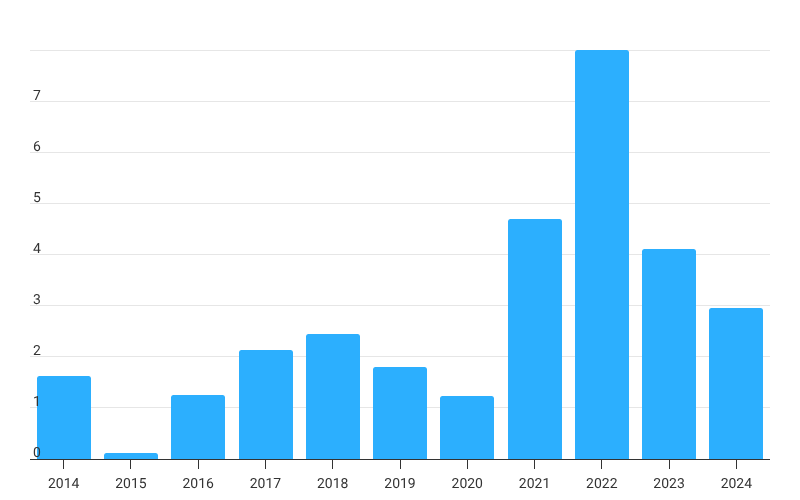
(Consumer Price Index, USA, 2014-2024)
Soaring food costs, utilities, and general operating expenses decreased profitability, and with no hard assets in reserve, the restaurant was forced into a shorter and shorter-term mindset.
In order to maintain a fully-staffed operation, the restaurant had to meet rising wages. Cash was spent as soon as it went through the till to help the restaurant compete for customers in the crowded NYC hospitality sector.
Rather than price its food in line with inflation, Powell’s tried to hide price rises by decreasing the quality of its ingredients and by shrinking the portion sizes. Hungry New Yorkers noticed, and the restaurant began to lose its loyal customer base. Two- and three-star reviews reduced its ratings, and restaurants that maintained quality and quantity (likely by employing reserve capital) attracted new diners.
Honesty regarding value and maintaining loyal customers are the cornerstones of SMB success. Without a rainy day fund to invest in hard times, no business can stay true to its principles and survive. Bitcoin changes this.
As an aside, Powell’s is not a real Lower Manhattan restaurant. It’s a reference to the head of the Federal Reserve Bank (who probably would know better than to hold cash on a company balance sheet). There are multiple reasons why restaurants and other SMBs don’t survive, and my intention is not to single out any ‘failed’ business. However, in my opinion, a strong balance sheet can help businesses weather the storms of global crises, high inflation, and changing trends and markets.
Put simply, Bitcoin is a superior savings tool to dollars.
- $100 from 2020 is worth $76 today (a 24% reduction in purchasing power)
- $100 in BTC from 2020 is worth $1,000 today (a 1,000% increase in purchasing power)
This simple comparison is a preview of what is to come from these columns. But I am not publishing this just to advocate for Bitcoin; I want to help SMBs achieve longevity and prosperity because they are the businesses with the most potential, but the narrowest margin for survival.
***
Who is This Publication For?
2025 has been the year of institutional adoption for Bitcoin. The discussion has focused on ETFs, treasury companies, and bigger corporate entities. Today Bitcoin is held by three companies in the S&P, nine in the NASDAQ, and 140 of the 60,000 public companies globally.
But the opportunity here is for the little guy, the agile entrepreneur, who, like Gonzalo with his restaurant, can make decisions without the approval of dozens of board members and thousands of shareholders.
According to Pew research, there are 33.2 million small businesses in America (99.9% of the total number of businesses). The US Chamber of Commerce estimates that 61.6 million Americans are employed by a small business (500 employees or fewer).
With Bitcoin use for small businesses just getting started, entrepreneurs, founders, and owners must harness the opportunity to gain an advantage over bigger corporations. Simply put, SMBs must learn the ‘why?’ And the ‘how?’ of Bitcoin before they suffer the same fate as Powell’s (and countless other shuttered companies).
This column is for you if:
- You own a small business or make key financial decisions for your employer.
- You are curious about how using Bitcoin can make your business more competitive.
- You are committed to challenging outdated 20th-century financial ‘wisdom’.
This publication is dedicated to community projects, mom-and-pop shops, neighborhood fixtures, and the kind of listings you used to find in the Yellow Pages. Real people helping others in their local area.
I believe that SMBs are the most overlooked market segment in the world of Bitcoin business, and they have the most to gain from adoption. Conferences invite glamorous speakers who present charts that run into the billions. Bitcoin Magazine champions treasury vehicles and centralized exchanges. But Bitcoin is a grass-roots movement, and real adoption happens over the counter at your local diner, or while chatting with a neighborhood landscaper.
My goal is to help SMB owners see that Bitcoin is better money, and that getting off zero is the first step.
I don’t expect you to trust me. Along the way, I’ll have to prove beyond doubt that Bitcoin is not just useful, but inevitable for your business. We’ll look at examples of small businesses in detail—from those saving in Bitcoin to those accepting payments and even pricing services or thinking in sats (the smallest unit of Bitcoin).
As we say in Bitcoin, ‘Don’t trust; verify’.
***
Why Talk About This Now?
Money is currently undergoing a profound transformation. Even in the US (the country that controls the world’s reserve currency), inflation rates are forcing businesses to close, and capital is flooding into stocks, gold, and real estate—anything that holds value better than the good ol’ greenback.
Now, there is a new digital asset, which comprises a better store of long-term value. Bitcoin is the ultimate form of money. Welcome to the Digital Transformation (DX) of capital.
In a world where everything is being digitized, the most valuable assets will also be digital. Unlike real estate, gold, or other physical property, Bitcoin is a form of digital property that can be easily stored, secured, and transferred across the internet without a trusted third party. This makes it the ideal form of property for the 21st century. It negates the need for individuals and corporations to take on more risk just to preserve their wealth.
As digital scarcity is understood by more people and businesses, the monetary premium currently stored in real estate and other goods will flood into Bitcoin, solving the problem of capital destruction and returning other assets to their utilitarian value (we should use houses for living in, rather than storing our money). The network effect will become unstoppable, causing a "monetary network flywheel" that absorbs all other forms of capital.
- Bitcoin is scarcer and easier to store and transfer than gold.
- Bitcoin is a better investment than stocks (it's not subject to corporate risk or dilution)
- Bitcoin is a better currency than any fiat money (it's not inflationary).
Whatever the size of your business, you will feel the effects of DX, and the earlier you understand the change, the sooner you can harness the benefits of digital capital.
The beauty of a decentralized monetary network is that it is open to everyone. You don’t need to have huge cash reserves to participate. You don’t need a PhD in economics to understand the right strategy to take. And no institution or government entity can deny you access.
Bitcoin is for anyone.
***
The SMB Opportunity

This graphic shows the relative size of business customers of Bitcoin exchange River.
Consider the size of your sector—perhaps you can’t even see it.
This goes to show how early it is in the game for SMBs. As Bitcoin is a bottom-up movement, the largest ownership group is still individuals. The next stage in the process is for those individuals to use Bitcoin to help one of the 34 million small businesses in the USA reap these benefits:
- More independence and flexibility
Thriving businesses offer owners the freedom to set their own hours, make their own decisions, and build a company culture that reflects their personal values. - Financial rewards & professional fulfillment
Successful deployment of Bitcoin can lead to noteworthy achievements, higher incomes, and the ability to build equity in an asset that can be sold in the future. - Direct community connection
Business owners can focus on building personal relationships and a strong sense of pride and community belonging. - Supportive ecosystem
In a thriving local economy, small businesses often support each other to form a mutually beneficial network.
If you are a small-business owner, you’ll know that it’s never all about YOU.
The opportunity exists for local communities, as well as business owners. When good people receive good service, they reciprocate. Customers, clients, and local supporters will give back to businesses they value to create a local flywheel of success.
Benefits for local communities with thriving SMBs
- New jobs lower unemployment and increase local wealth (remember that over 60 million Americans already work for SMBs). This makes the local economy more resilient to economic downturns, as it is not dependent on a few large corporations.
- A stronger local economy means the money spent at SMBs stays in the community, circulating to support other local businesses and services.
- A sense of identity and belonging develops as unique local businesses serve as community hubs, fostering better social connections.
- Sustainable aims are met as local economies decrease the need for long-distance transportation of goods, lower carbon emissions, and reduce other environmental costs.
- The supply chain grows as a supportive local economy provides an ideal environment for budding entrepreneurs to start and grow new ventures.
- Quality is championed by local business owners who are invested in maintaining a strong reputation within their community.
When SMBs win, everybody wins.
The possible impacts of Bitcoin adoption for SMBs, employees, communities, and families are huge. With any new technology, it is the long tail of adoption that makes the biggest difference in ensuring local communities thrive and small-town America prospers.
The ball is in your court, dear business owners, and you miss 100% of the shots you don’t take.
If you have any questions, you can book a meeting by reaching out to Jeff at jeff@sovreign.io
(This article was originally published on Substack on October 8th, 2025).